Sustainable stays in Hanoi: how to pick a lower-impact hotel
Plenty of Hanoi hotels print a towel-reuse card and call themselves green. Here is how to tell a genuinely lower-impact stay from the marketing, which certifications hold up, and which neighbourhood cuts your car trips to almost nothing.
What lower-impact actually means in a city like Hanoi
Hanoi's pressure points are specific, and they decide which hotel features matter. Tap water is not potable, so a property handing out two 500ml plastic bottles per guest per day generates roughly 700 bottles a year per room; one with a filtered refill station on each floor cuts that to near zero. Summers run hot — June to August highs sit at 33-38C with heavy humidity — so air-conditioning is the single biggest energy line, and key-card power cut-offs, LED lighting and real insulation count for more here than any bamboo straw. Winter, December to February at 15-18C, needs almost no cooling, so a genuinely efficient hotel's power draw swings hard with the season.
Waste and laundry are the other two. Hanoi's drainage is overloaded through the May-to-September rains, and linen is the heavy load — a hotel that changes sheets and towels daily across a three-night stay washes three times what a weekly-change policy would. Food is the quiet one: a breakfast buffet cleared and binned at 10am is the norm, so properties that cook to order or run a small a-la-carte breakfast waste far less. None of this appears in a star rating or a review score. You have to ask, and the answers separate a working programme from a laminated card propped on the bathroom sink.
The certifications that mean something (and the ones that don't)
Three labels carry weight in Vietnam. Travelife is the international standard used by the Elegance Hospitality Group, whose La Siesta hotels in the Old Quarter — La Siesta Premium Hang Be sits around $85-100 a night — audit water, energy and staff conditions to hold their rating. Green Lotus, or Bong Sen Xanh in Vietnamese, is the national label run by the Vietnam tourism administration and scored from one to five lotuses; a four- or five-lotus property has had an independent inspector check the plumbing and the kitchen, not the brochure. Green Key and EarthCheck are the other two you can trust, both requiring an annual re-audit. Anything self-declared — 'eco-resort', 'green stay' — with no named scheme behind it is positioning, not proof.
The tell for greenwashing is specificity. A hotel with a real programme will give you its refill-station count, its linen-change interval and where its breakfast eggs and greens come from without pausing. A hotel that only mentions towel reuse, or drops a stock photo of a leaf on its booking page, has done the cheapest possible thing. Skip the ones charging a premium for an 'eco' room that differs from a standard room only by a sign on the door; you are paying for the wording. The certification should be visible on the property's own website with a certificate number or an expiry date you can actually check.
Pick the neighbourhood that cuts your car trips
The lowest-impact decision you make is not the hotel — it is where it sits. Base in Hoan Kiem, inside or on the edge of the Old Quarter, and almost everything a first visit wants is within a 20-minute walk: Hoan Kiem Lake, the 36 guild streets, Dong Xuan market, the Opera House and the French Quarter. Stay there and you can go three days without a single Grab car. Choose a cheaper hotel out in Cau Giay or Ha Dong to save $10 a night and you spend it straight back on daily 20-to-30-minute car rides, each one feeding the traffic that already chokes the centre. Walkability is the greenest amenity a Hanoi hotel can have.
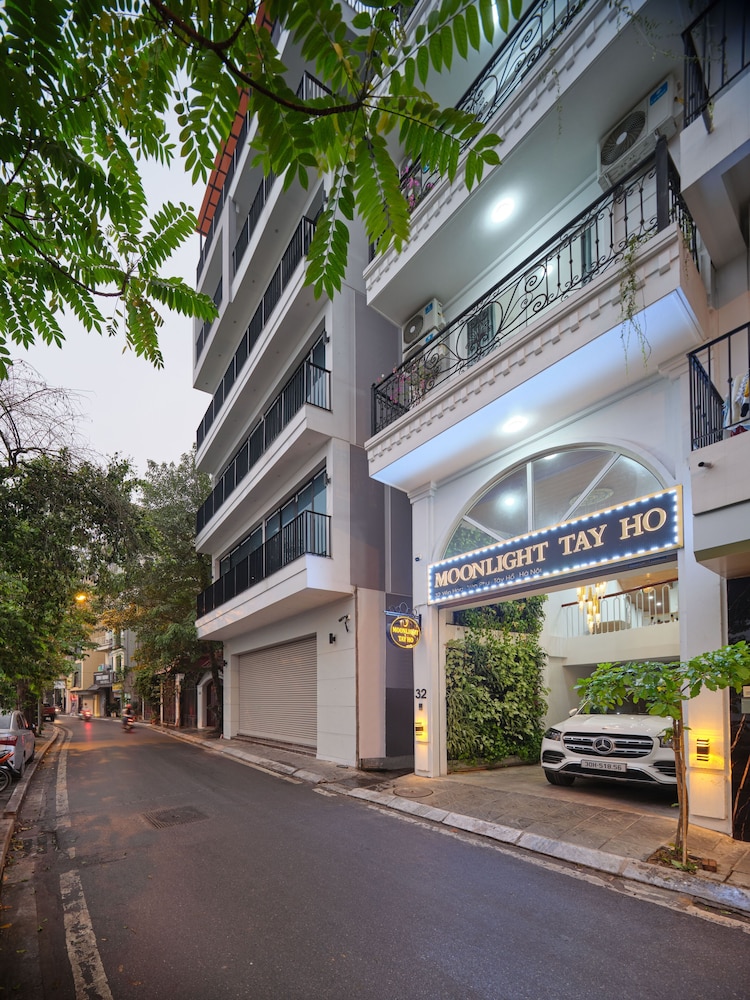
For longer or slower stays, Tay Ho (West Lake) is the other smart base. It wraps Hanoi's largest lake — about 500 hectares with a 17km shoreline — some 5 to 6 km north of the Old Quarter, roughly 15-20 minutes by Grab. It is walkable, bike-friendly along the water, and stacked with independent cafes and serviced apartments rather than tour-bus hotels. From either base, drop the airport-hotel idea: Noi Bai is 27 km and about 45 minutes out, and a room near it only guarantees two long taxi runs. Arrive and depart from the centre and let a single transfer carry the distance instead of a daily shuttle.
Serviced apartments beat nightly hotels for stays over four nights
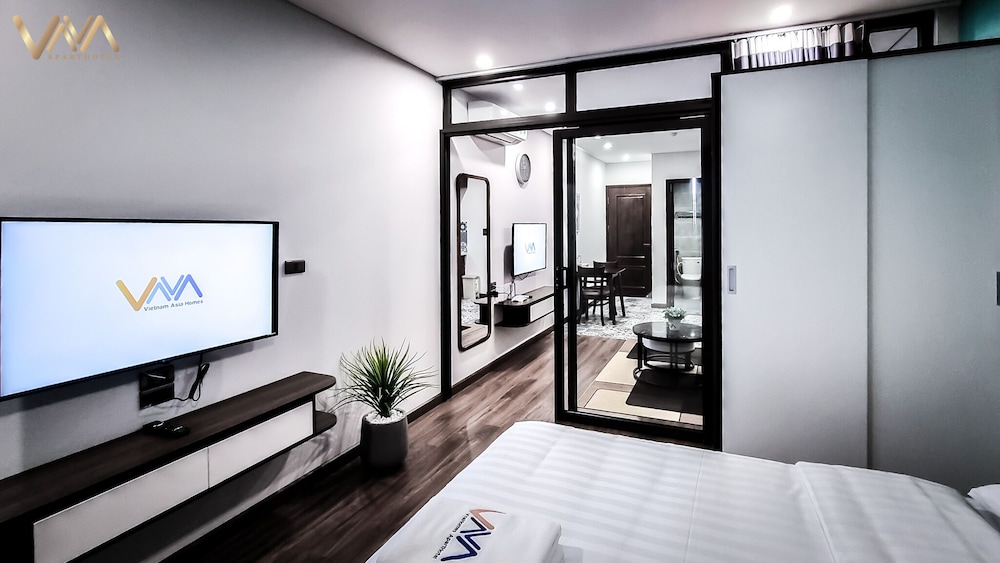
If you are in Hanoi for four nights or more, a serviced apartment is usually both the lower-impact and the cheaper choice. Somerset Hoa Binh on Hoang Quoc Viet, from around $55, and the Granda Suites apartments closer to the centre give you a kitchen, so you are not ordering delivery in single-use containers three times a day, and they change linen weekly rather than daily by default. The per-night footprint of a serviced flat with a small kitchen and a washing machine sits well below a full-service hotel running a daily buffet, a spa and a heated pool, and across a week the nightly rate usually undercuts a comparable hotel room too.
The trade-off is service: no concierge desk, no included breakfast, sometimes a walk-up instead of a lift. If that matters, split the difference — a mid-range boutique hotel that will switch to a weekly linen change when you ask at check-in gets you most of the way there. What to avoid for a long stay is the big international resort model with year-round heated pools and a 40-dish buffet; several of those sit around Tay Ho and they carry the heaviest per-guest load in the city. Match the property to how you will actually live in it for the week, not to the gloss of the photos.
The five questions to ask before you book
Email the property, or read its own site, for five things. One: is there a filtered water refill station, and are the rooms free of single-use plastic bottles? Two: how often are sheets and towels changed on a multi-night stay — every day, or on request? Three: is the lighting LED, and does room power cut out when you pull the key card? Four: where does breakfast come from — cooked to order or a buffet, and is the produce sourced locally? Five: does the hotel hold a named certification such as Travelife, Green Lotus, Green Key or EarthCheck, with a current certificate you can see? Clear answers to four of those five point to a real programme.
One last filter closes it. Read the recent reviews for the words 'plastic', 'buffet waste' or 'aircon broken', which surface the gap between a hotel's marketing and its day-to-day operation. If a property ignores your email entirely, that is your answer — a place running a genuine programme is usually keen to talk about it. Book the one that replies plainly, sits within walking distance of what you came to Hanoi for, and fits your length of stay. That single decision does far more than any number of nights spent reusing the same towel.
Questions, answered
Hotels in Hanoi
See all stays →Curated picks are coming — meanwhile, the live search covers every bookable property at the same price or better.